Game Recap Summary
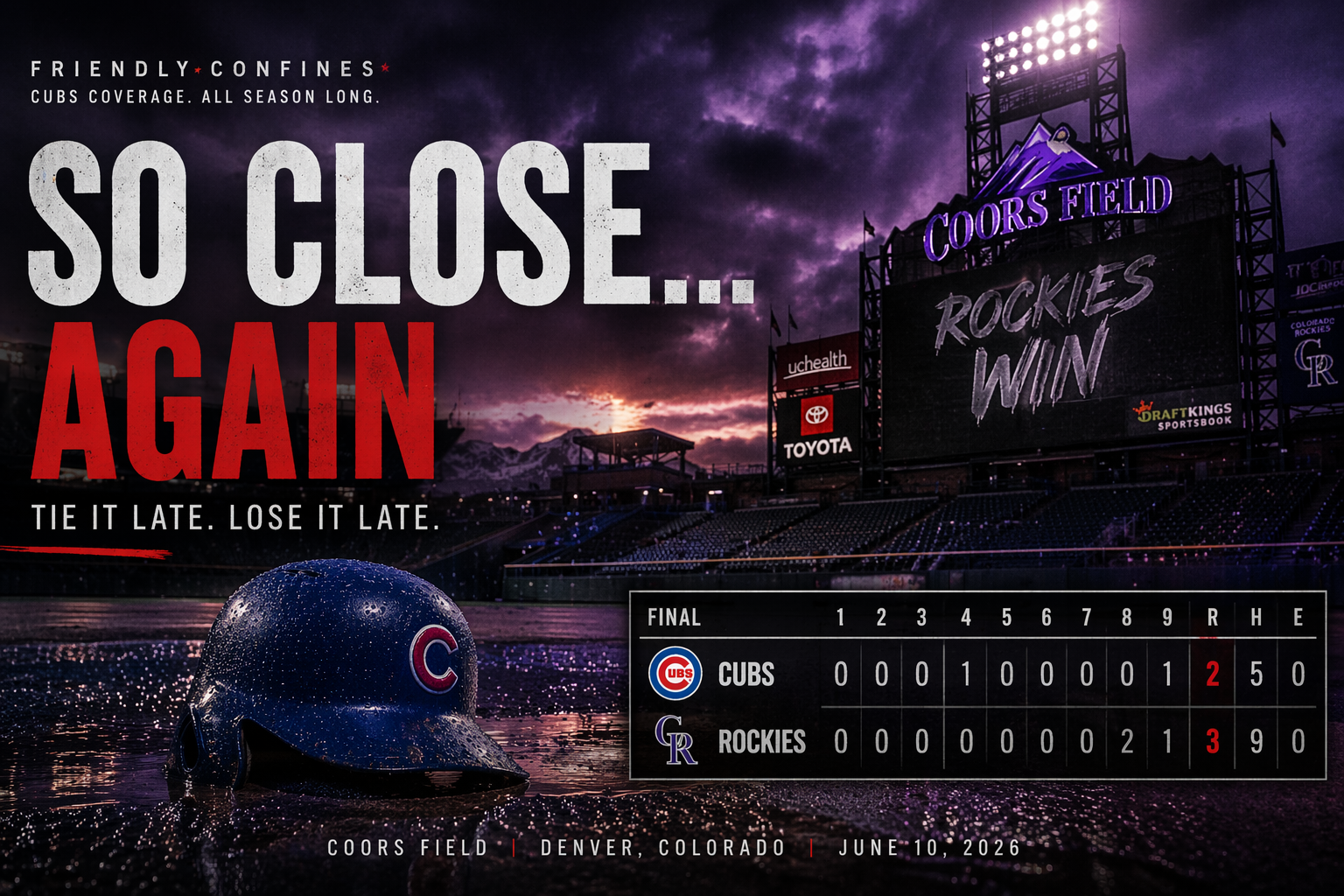
The Cubs carried a 1–0 lead into the eighth behind five scoreless innings from Shota Imanaga, but TJ Rumfield’s two-run homer flipped the game to 2–1. Ian Happ answered with a game-tying homer in the ninth, only for Colorado to walk it off in the bottom half for a 3–2 Rockies win.
This was not yesterday’s script. The Cubs were not buried early. They got the start, they had the late answer, and they still let the game get away. That makes the loss feel heavier, because this was the exact kind of game a steadier team finds a way to win.
Game Flow Chart
A strong start, wasted
Shota Imanaga was sharp. Five innings, two hits, no runs, seven strikeouts. The Cubs did not need dominance from the offense to win this game; they needed competence. Instead, they managed only one run through eight innings and once again turned a winnable game into a last-innings survival test.
The offensive problem did not disappear
Even though this loss ended with late drama, the underlying issue still looked familiar. The Cubs did not create enough sustained pressure. They finished 0-for-4 with runners in scoring position and left six men on base. That is better than yesterday’s 0-for-8, but it is still the same larger problem: opportunities are not being turned into innings.
Ian Happ gave them a pulse
For a brief moment, it felt like this game might finally turn. Happ’s ninth-inning homer tied it at 2–2 and gave the Cubs a real emotional jolt. That should have been the swing that reset the whole night. Instead, it became another reminder that the Cubs are struggling to let momentum live longer than a few minutes.
What changed the game
1. Rumfield’s eighth-inning homer
One swing turned a controlled 1–0 Cubs lead into a 2–1 deficit. That is the exact danger of low-scoring games when the offense has not built any cushion.
2. No separation while Imanaga was rolling
When your starter is shoving, that is when the lineup has to add weight to the scoreboard. The Cubs never did. They played the whole night one bad inning away from disaster, and eventually disaster arrived.
3. The walk-off bottom of the ninth
After Happ tied it, the bullpen still had a chance to send the game deeper or at least reset the pressure. Instead, two hits and a walk-off RBI single ended it immediately. That is the kind of emotional blow that makes a losing streak feel heavier than the raw number suggests.
Why this one feels worse than the 7–3 loss
The 7–3 loss on June 9 was ugly because the Cubs got buried early. This one is uglier in a different way. It was right there to be won. The starting pitching held up, the game stayed within reach, and the Cubs still could not finish. Those are the losses that expose whether a team can execute in real leverage or whether it is still living on thin confidence.
What has to change now
- Create offense before the ninth. The Cubs cannot treat every late homer like a rescue plan.
- Turn good starts into actual wins. Imanaga gave them the formula. The lineup and bullpen did not complete it.
- Stop letting momentum disappear instantly. The tying homer should have felt like life. Instead, it lasted one half-inning.
The Cubs Blessing
May the next strong start get the run support it deserves. May the late innings stop feeling like a test the Cubs fail every time. And may the next shot of momentum actually hold long enough to matter.
Final thought
This is what makes the current stretch so frustrating. The Cubs are not always getting blown out anymore. They are finding new ways to lose different kinds of games. Tuesday was an early collapse. Wednesday was a late collapse. Same result. Same questions. Until they start converting strong starts and late sparks into actual wins, the pattern is the story.